Online Misinformation Among Youth
From a broad societal question to a coherent intervention strategy that helps young people keep a grip on their digital world.
- Partner
- Europol
- Period
- April – June 2025
- Team
- Group of 5
- Target group
- Young people aged 12–17
- Methods
- Systems mapping, interviews, co-creation
How do teenagers deal with what they see online?
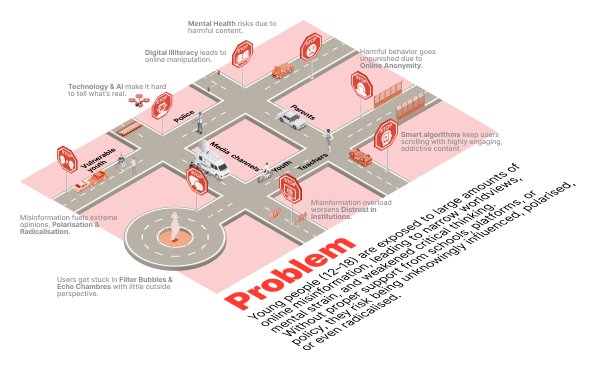
Young people (12–18) are exposed to large amounts of online misinformation, leading to narrow worldviews, mental strain and weakened critical thinking. Without proper support from schools, platforms or policy, they risk being unknowingly influenced, polarised or even radicalised.
Six steps
-
01
Exploring the context
Desk research on media literacy, algorithms, online credibility and existing initiatives, plus the briefing on online policing.
-
02
Mapping the actors
An actors map of youth, parents, teachers, influencers, news media, fact-checkers, platforms and policymakers, and who holds knowledge and influence.
-
03
Gathering perspectives
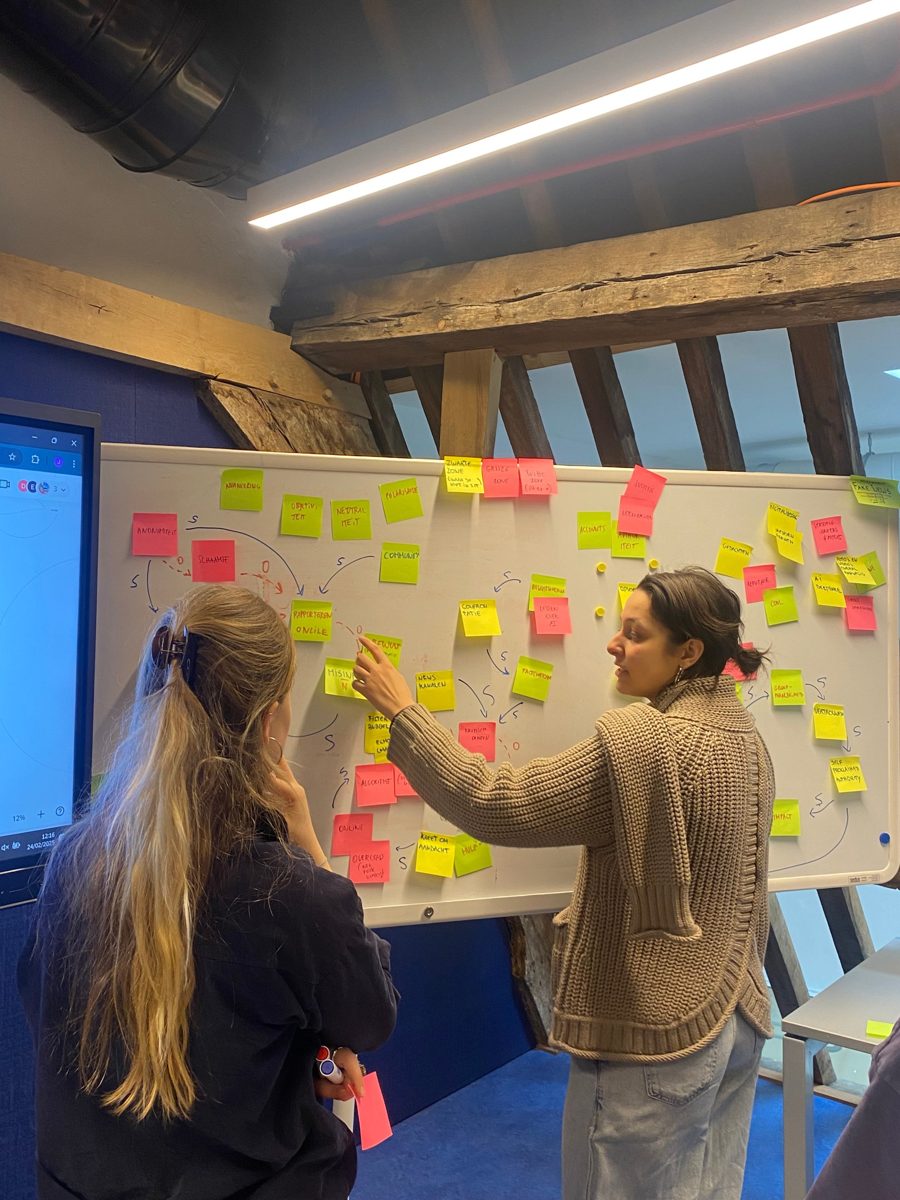
Conversations with young people and their surroundings, and expert input from the VRT fact-check desk and a care teacher.
-
04
Revealing patterns
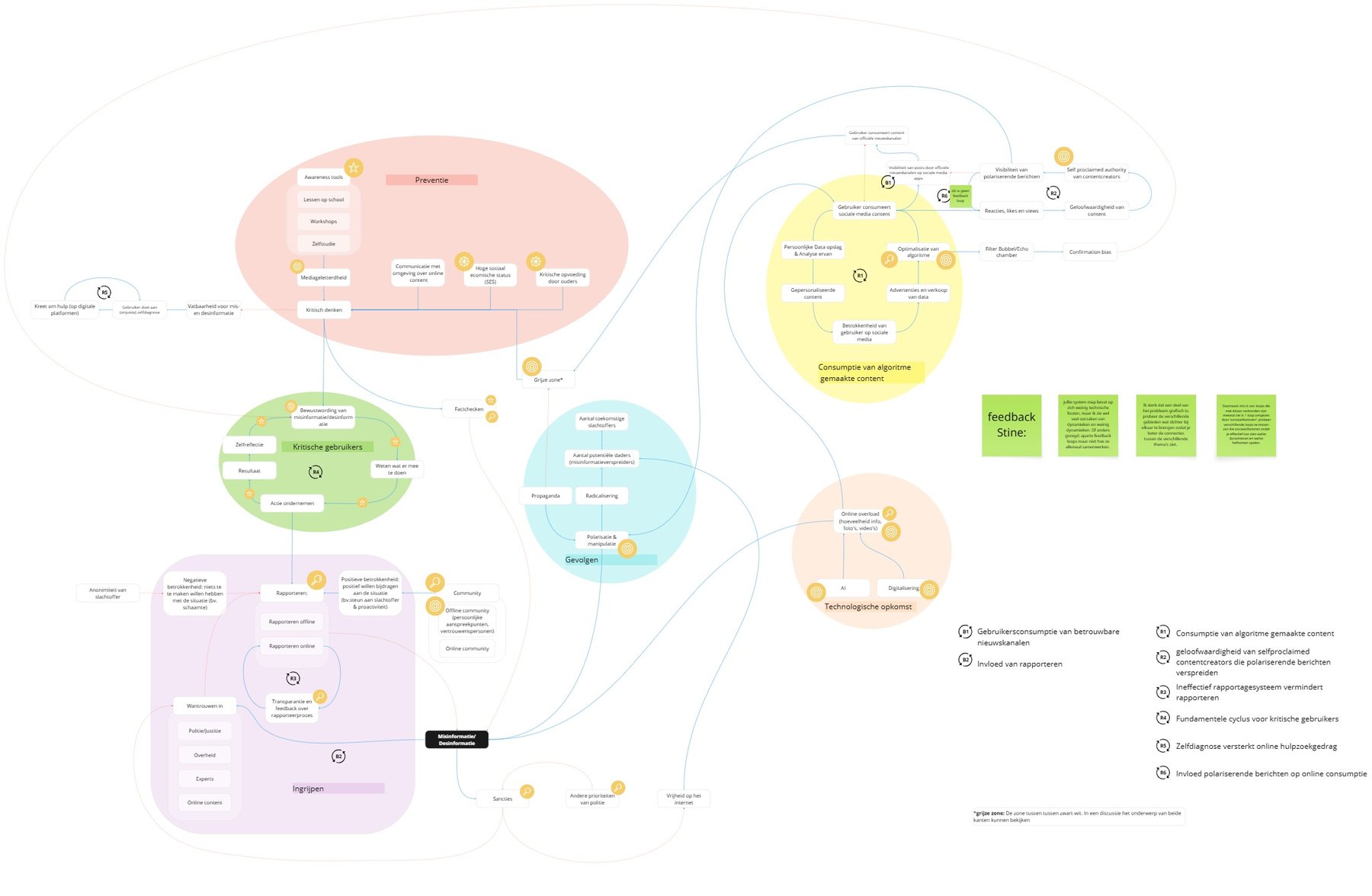
System maps with cause-and-effect relations and feedback loops, such as personalised content, engagement and filter bubbles.
-
05
Finding leverage points
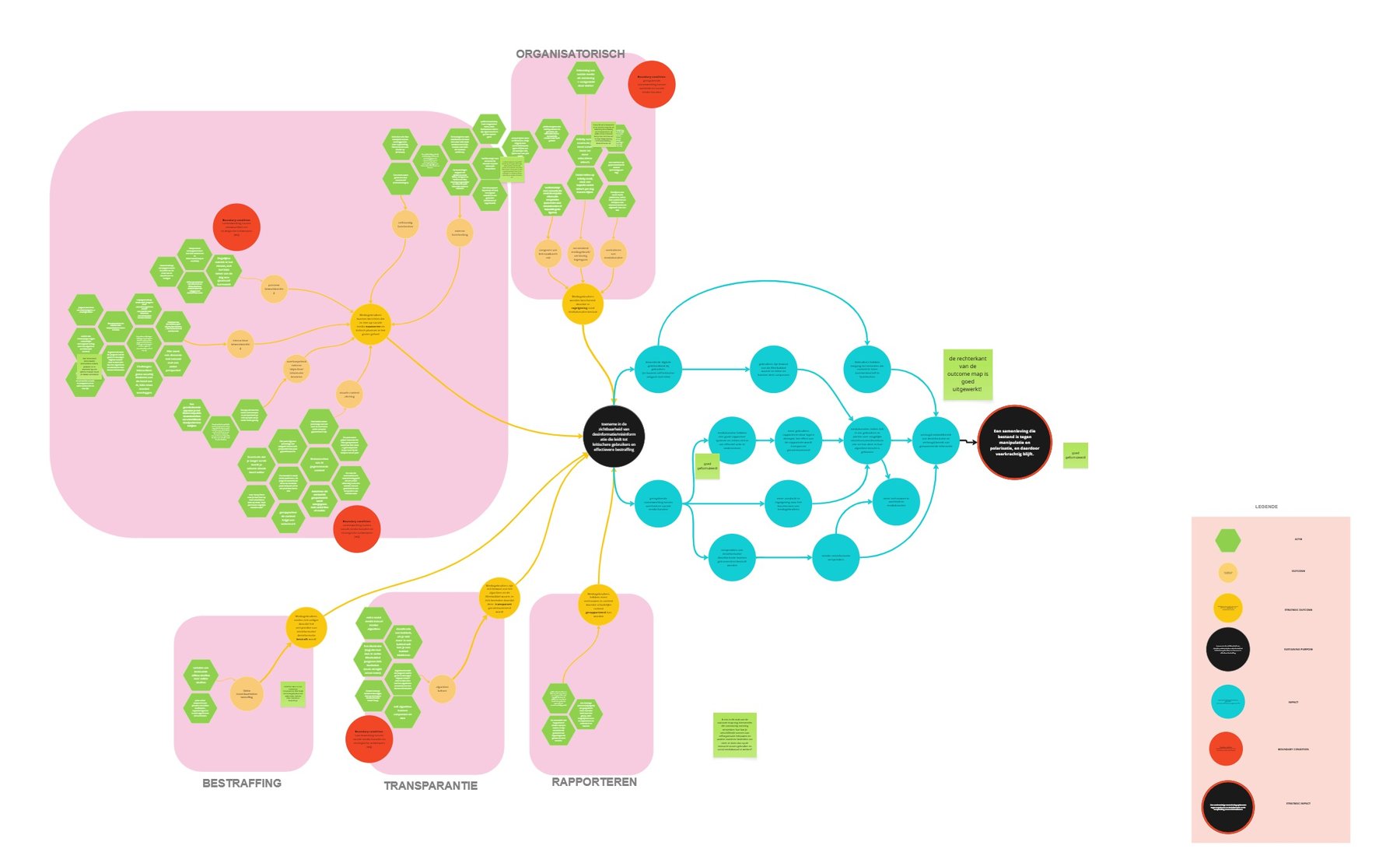
Interventions on several levels, from media literacy and fact-checking to platform changes, support and regulation, linked to long-term effects.
-
06
Making it tangible
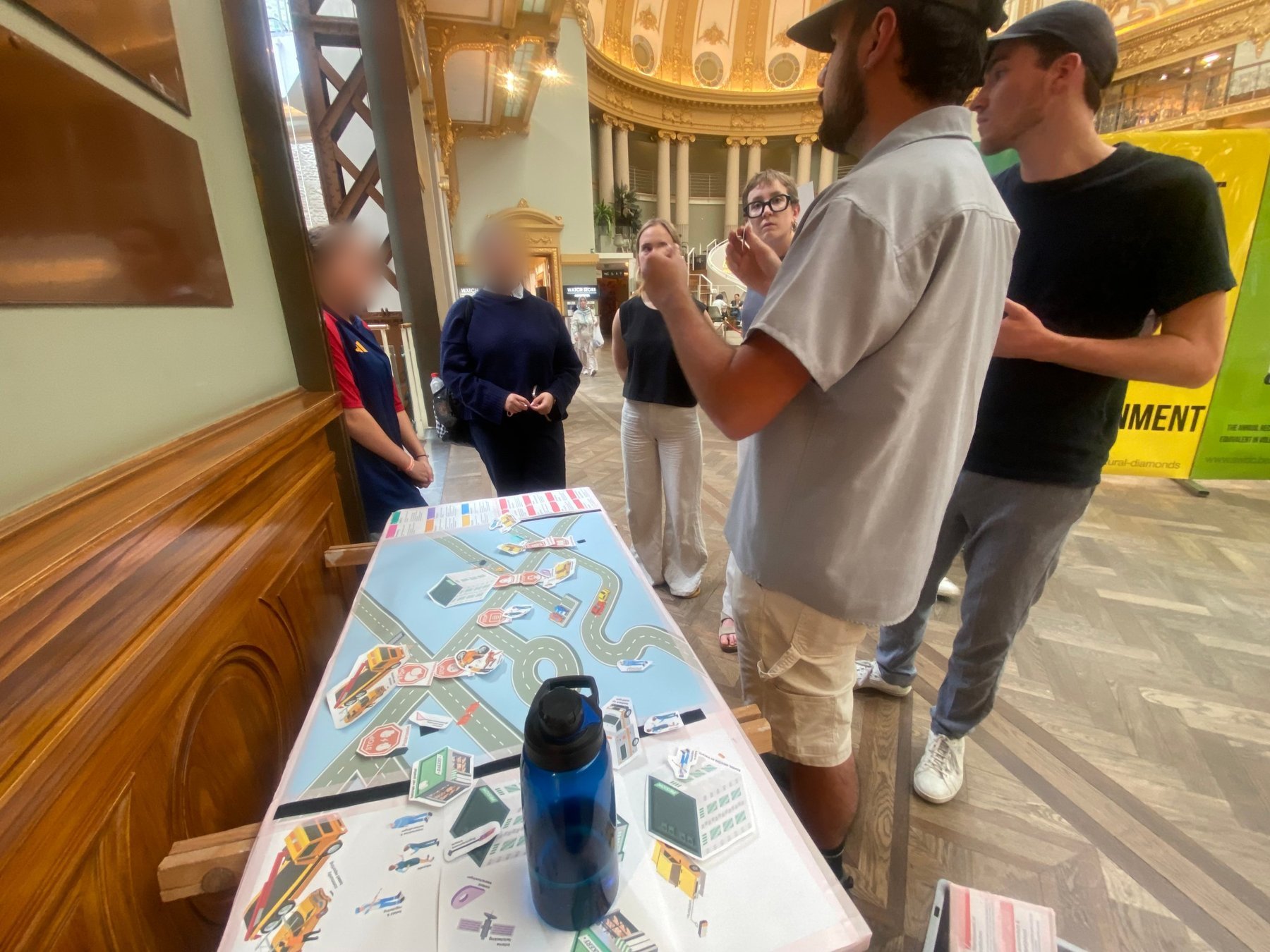
A physical city model as a metaphor to discuss problems, responsibilities and solutions with young people and parents, and sharpen the proposals.
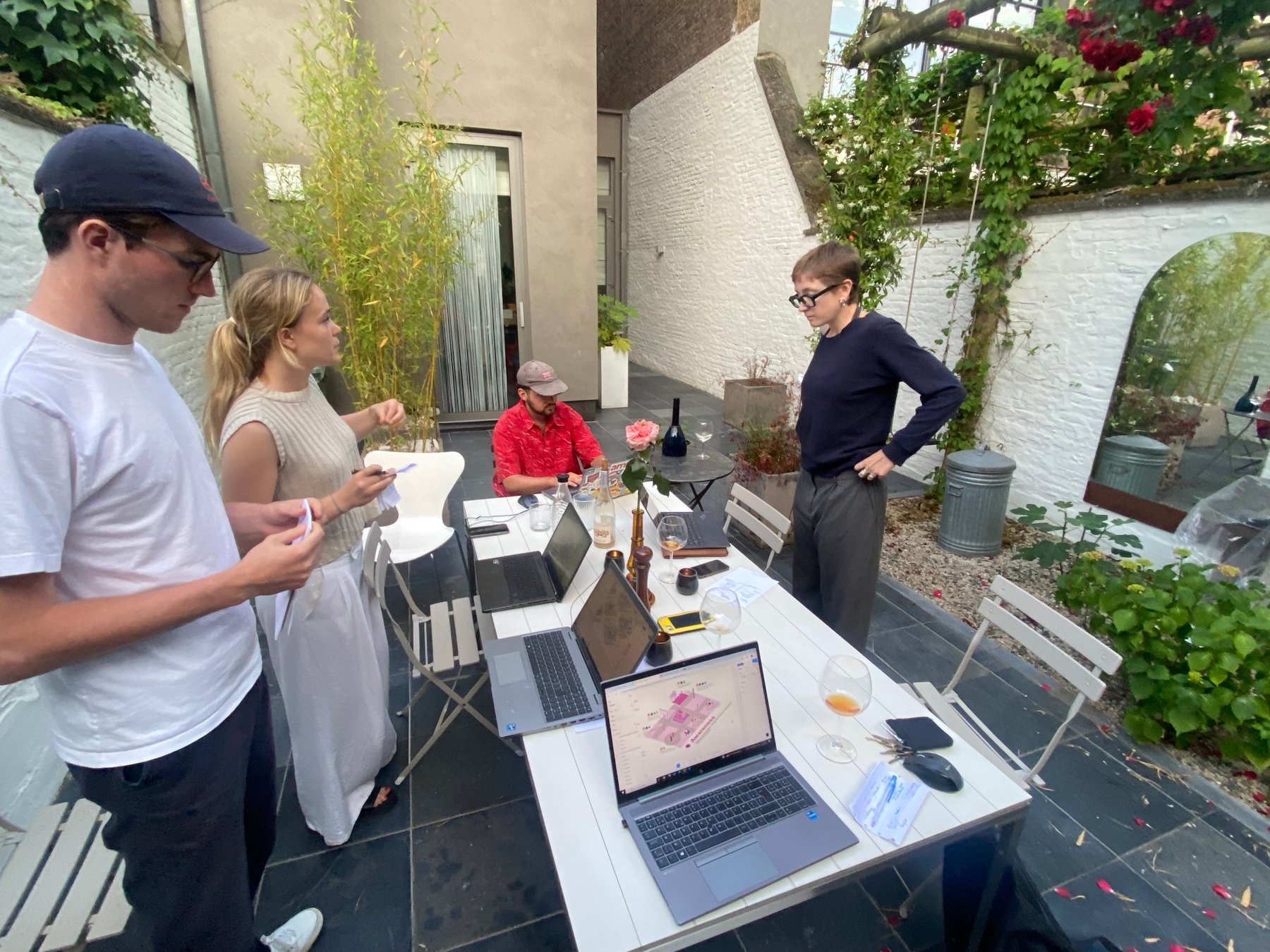
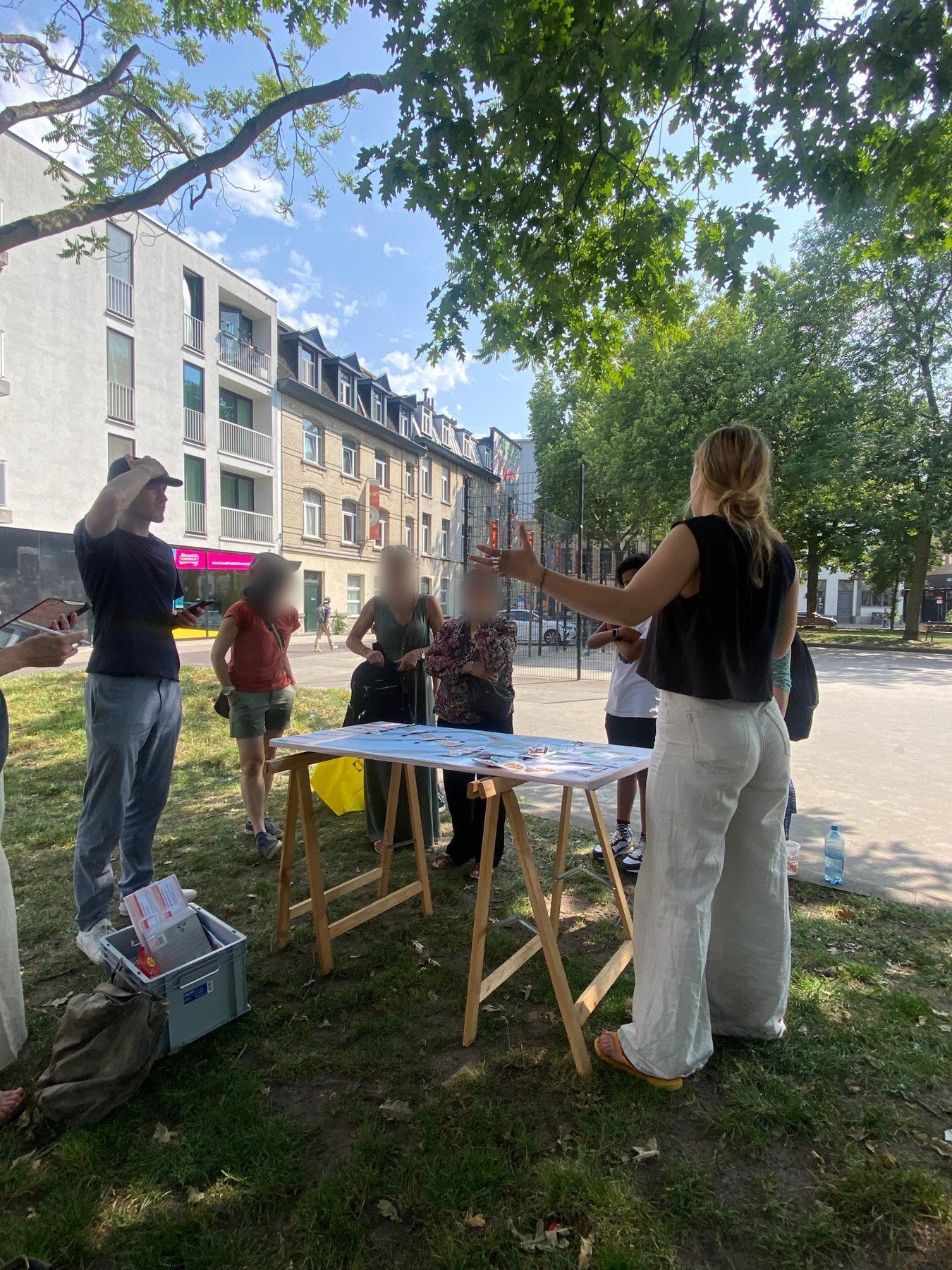
On the street with the city model
With the physical city model, we talked with young people and parents about problems, responsibilities and possible solutions. Their reactions helped us assess and sharpen the proposals.
“Young people want more grip on their own digital environment.”
Young people asked for
- Practical media education
- Recognisable AI content
- Reliable information
- Influence over their algorithm
Parents emphasised
- Protection
- Boundaries
- Platform responsibility
A city of interventions
Five intervention directions — awareness, transparency, fact-checking, organisation and intervening & supporting — translated into one city landscape of roads, buildings and traffic signs. Explore the districts below.
{{c.label}}
{{c.text}}