Modular aperitif plate
A parametric concept for personalised aperitif plates, shaped by your guests and your snacks.
- Course
- Advanced Prototyping
- Period
- October – November 2025
- Team
- Individual
- Tools
- Rhino, Grasshopper, Figma
One digital model, endless plates.
A parametric concept for personalised aperitif plates, for which I taught myself Rhino and Grasshopper through YouTube tutorials.
I developed a flexible design system in which shape, size, height and the number of compartments can be adjusted. From one digital model, different variants emerge, tailored to the number of guests and the snacks being served.
I also designed a conceptual app with a matching interface that lets consumers compose their own plate, connecting parametric product design with a digital experience that makes personalisation accessible and intuitive.
Shape size height compartments
In Grasshopper, every parameter of the plate is a slider. Changing a value instantly generates a new, production-ready variant.
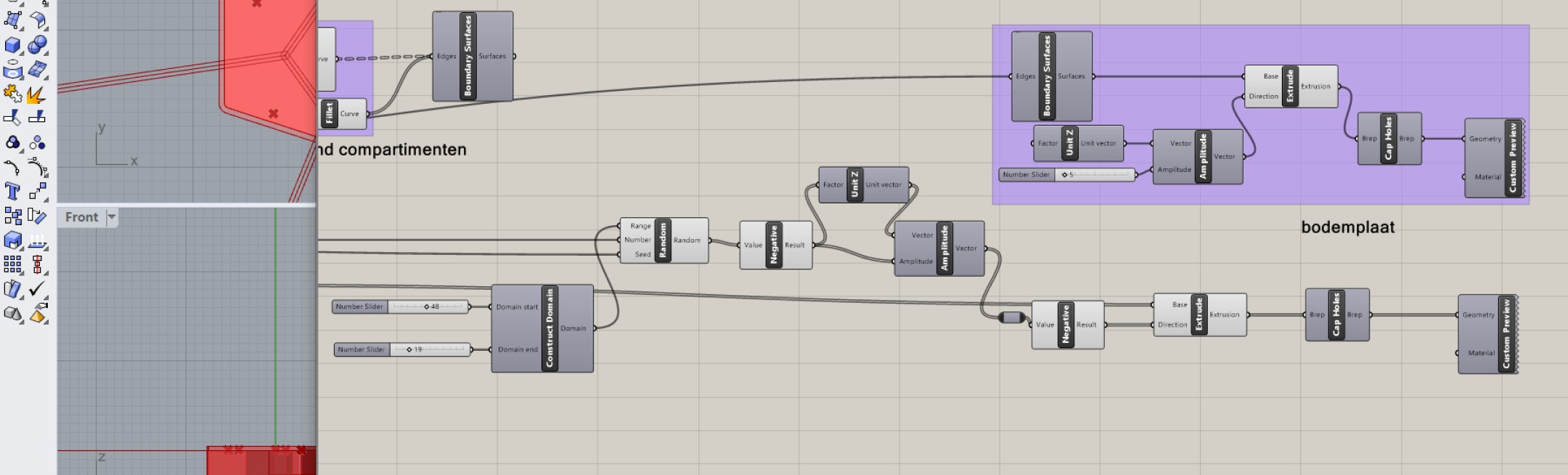
-
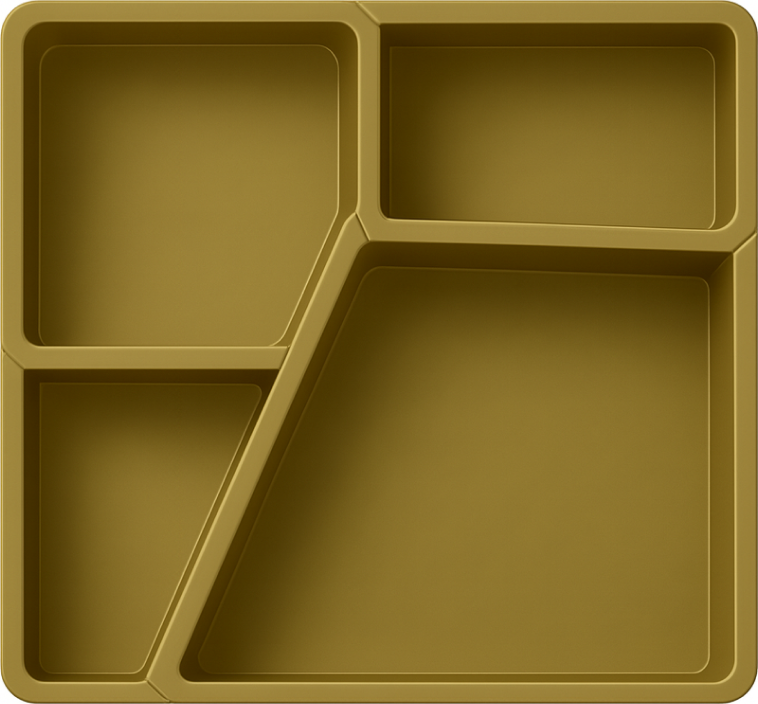
Square — 4 compartments
-

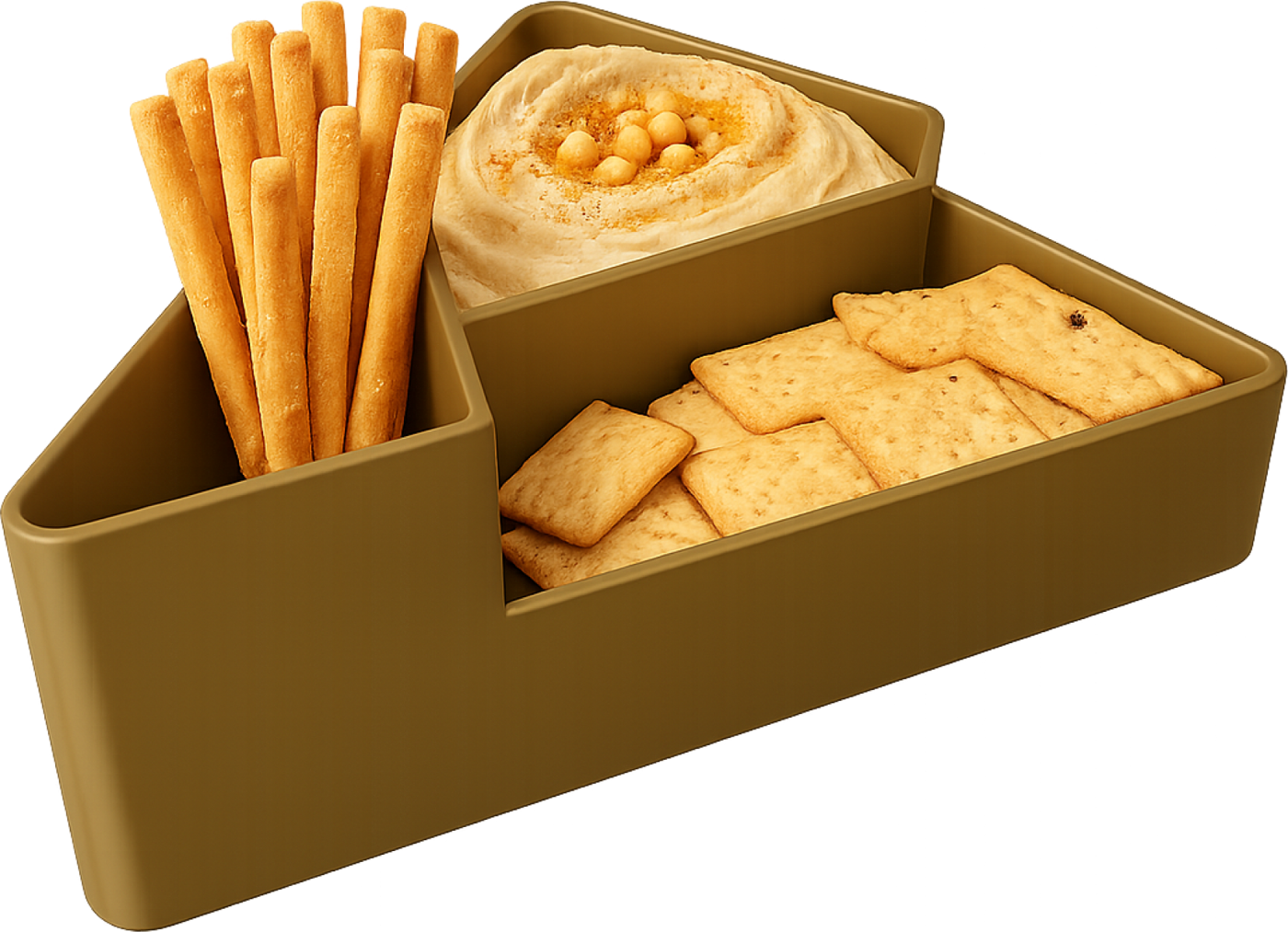
Triangle — 4 compartments
-
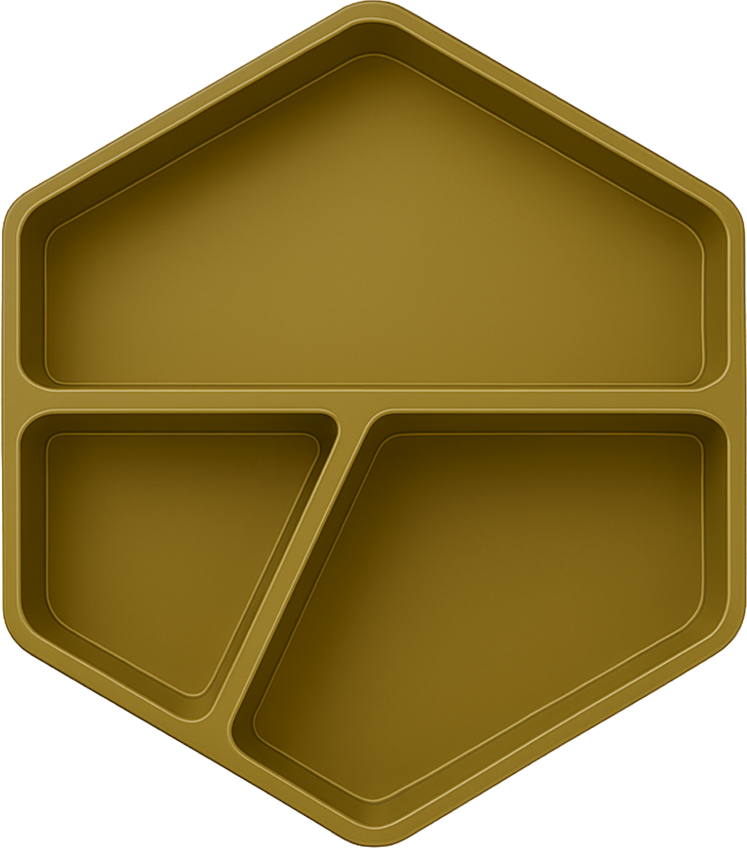
Hexagon — 3 compartments
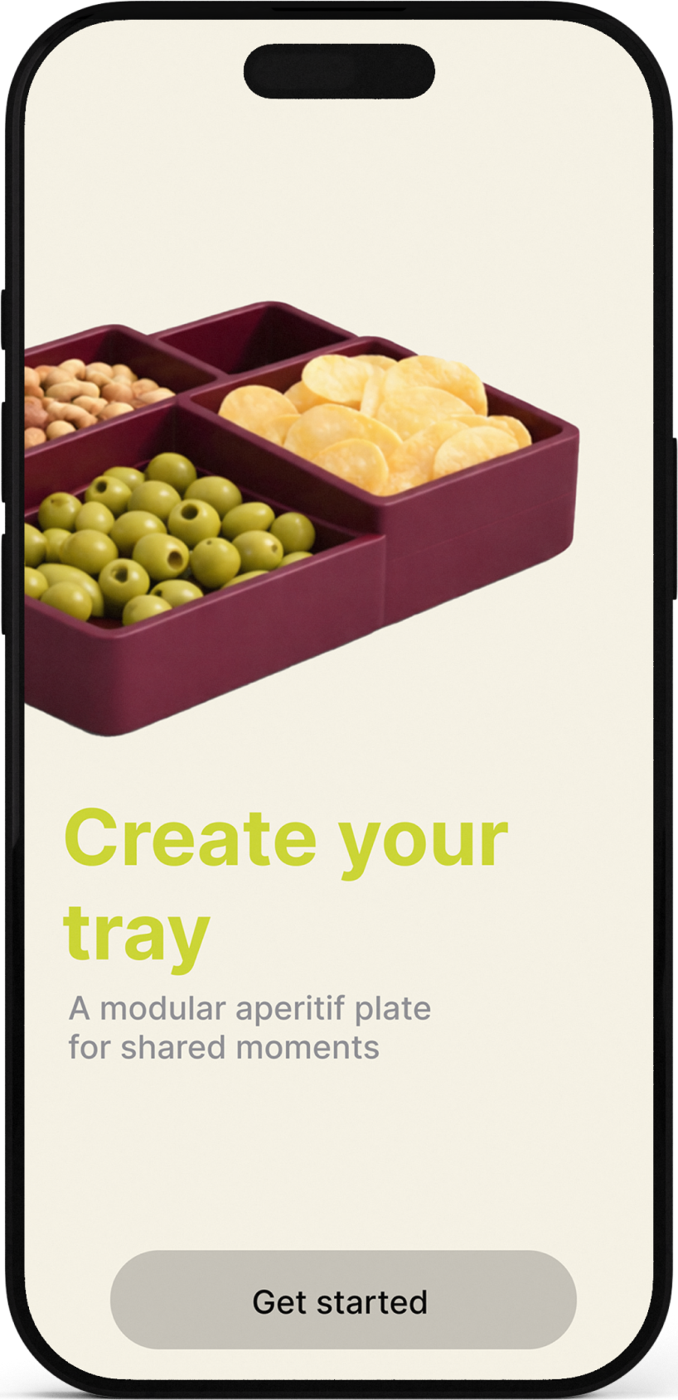
Create your tray
In four simple steps, users choose the shape, their snacks, the heights and the colour of their plate. The app translates these choices into the parameters of the digital model.
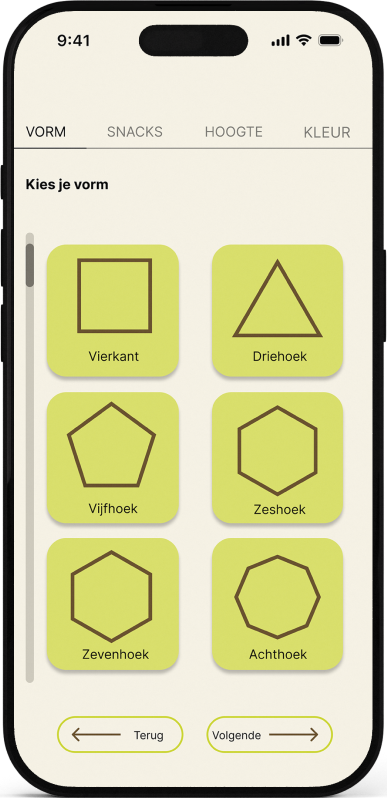 1 — Shape
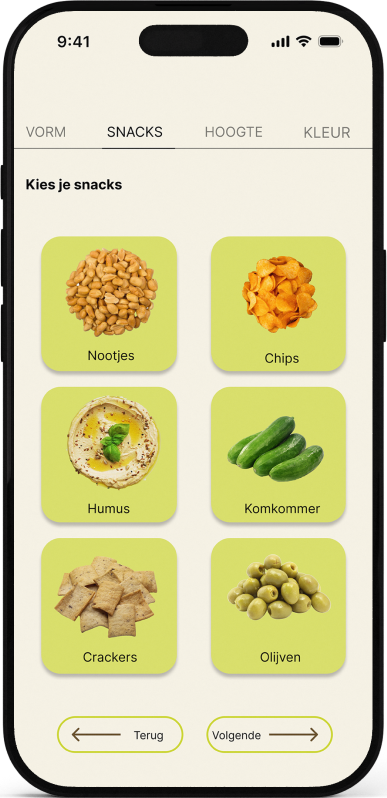 2 — Snacks
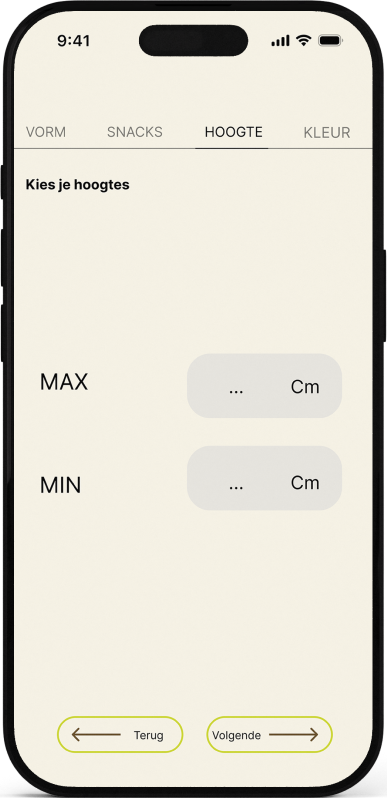 3 — Height
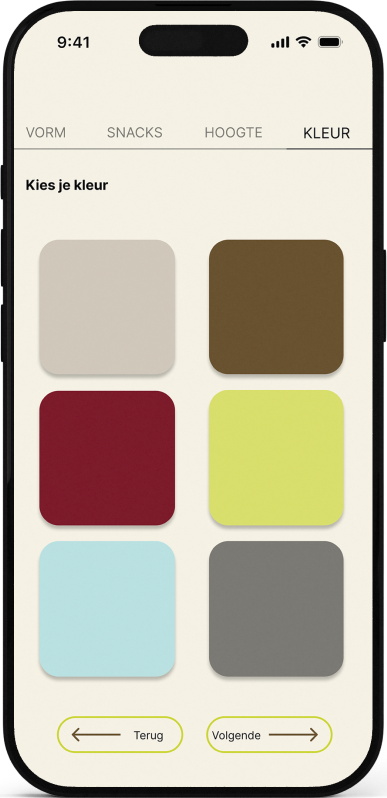 4 — Colour